One Pot, Endless Soul: The Panamanian Sancocho That Busy American Cooks Have Been Missing
The Stew That Panama Swears By
Every culture has that one dish — the one that shows up at funerals and birthdays, after long nights and during long illnesses, whenever someone needs feeding in the deepest sense of the word. In Panama, that dish is sancocho.
It's a humble thing on paper: chicken, root vegetables, herbs, water. But the sum is so much greater than the parts that Panamanians have elevated it to something close to a national symbol. There's even a saying that a good sancocho can cure whatever ails you — and honestly, after a bowl of the real thing, it's hard to argue.
For American home cooks who are comfortable with chicken soup, pot roast, or a good slow-cooker stew, sancocho is going to feel both familiar and completely new. The techniques are approachable. The ingredients are more available than you might think. And the payoff is a pot of food that tastes like it took all day — even when it didn't.
What Actually Goes Into It
Let's start with the non-negotiables, because sancocho has them.
First: the chicken. Authentic Panamanian sancocho is made with gallina, which is a mature hen rather than the young broiler chickens that stock most American grocery stores. Gallina has more flavor, more fat, and more collagen — all of which translate into a richer, more complex broth. You can find it at Latin, Caribbean, and many Asian grocery stores, often labeled as "stewing hen" in English. It's worth the extra trip.
If you genuinely can't find it, bone-in, skin-on chicken thighs are the best substitute. They have enough fat and connective tissue to produce a decent broth. Boneless, skinless chicken breast is not a substitute — it will give you pale, thin broth and dry meat, which is basically the opposite of what you're going for.
Second: the ñame. This is a starchy root vegetable — specifically a type of tropical yam — that gives sancocho its characteristic body and slight earthiness. It's not the same as the orange sweet potato that Americans call yam. True ñame is white or cream-colored inside, dense, and slightly sticky when cooked. Latin and Caribbean grocery stores carry it, usually in the produce section near the yuca and plantains.
Yuca (cassava) is also essential and much easier to find — it's available fresh or frozen at most Latin grocery stores and even some mainstream supermarkets. It breaks down slightly as it cooks, contributing to that thick, almost velvety texture that sancocho is famous for.
Third, and most importantly: culantro. Not cilantro. Culantro is a long, serrated herb with a flavor that's similar to cilantro but stronger and more persistent. It's what gives Panamanian sancocho its signature aroma. You can find it at Caribbean grocery stores and some Asian markets. If you truly can't locate it, use a generous amount of cilantro — but know that the flavor will be noticeably different.
The Regional Variations Worth Knowing
Sancocho isn't a single, fixed recipe. It shifts depending on where in Panama you're eating it.
In Panama City and the central provinces, the version most people know is relatively straightforward — chicken, ñame, yuca, corn, culantro, and onion, cooked until everything melds into a cohesive, golden broth. This is the baseline, and it's excellent.
In the Darién region and among Afro-Panamanian communities, you'll sometimes find sancocho made with coconut milk, which adds a subtle sweetness and richness that makes the dish feel almost luxurious. A splash of coconut milk stirred in toward the end of cooking is a simple addition that completely transforms the character of the stew.
In the Azuero Peninsula — Panama's heartland of traditional culture — sancocho often includes otoe (a purple-fleshed taro root) alongside the standard vegetables, and the seasoning tends to be more assertive, with more garlic and a touch of ají chombo.
All of these are valid. All of them are delicious. And all of them are worth trying once you've got the baseline down.
A Step-by-Step Guide to Getting It Right
Ingredients (serves 6-8):
- 3–4 lbs stewing hen or bone-in chicken thighs, cut into large pieces
- 1 lb ñame, peeled and cut into 2-inch chunks
- 1 lb yuca (fresh or frozen), peeled and cut into 2-inch pieces
- 2 ears of corn, cut into thirds
- 1 large onion, roughly chopped
- 6 cloves garlic, smashed
- 1 bunch culantro (or 1 large bunch cilantro), roughly chopped
- Salt and black pepper to taste
- 10–12 cups water
Instructions:
Season the chicken generously with salt and pepper. In a large, heavy pot, combine the chicken with the onion, garlic, and half the culantro. Cover with water and bring to a boil over medium-high heat.
Once boiling, reduce to a strong simmer and cook for 30 minutes if using chicken thighs, or 60–75 minutes if using stewing hen. Skim any foam that rises to the surface during the first 10 minutes.
Add the ñame and yuca. Continue cooking for another 25–30 minutes, until the root vegetables are completely tender and beginning to break down slightly at the edges.
Add the corn and cook for another 10 minutes. Taste the broth and adjust salt as needed. Stir in the remaining culantro just before serving.
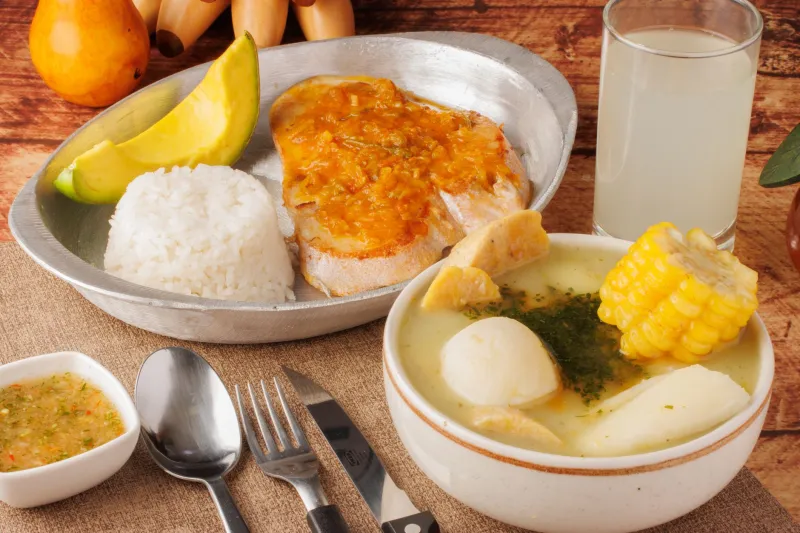
Serve in deep bowls with white rice on the side — some people serve the rice in the bowl, others keep it separate. Both are correct.
Smart Shortcuts for Busy Weeknights
The full version of sancocho is a weekend project, but the soul of the dish is adaptable. Here's how to make it work on a Tuesday.
Frozen yuca cuts prep time significantly and performs just as well as fresh in this recipe. You can find it at almost any Latin grocery store and many mainstream supermarkets.
A pressure cooker or Instant Pot cuts the cooking time roughly in half — and the pressure actually helps break down the root vegetables into that thick, stew-like consistency faster. Use the sauté function to bloom the aromatics first, then pressure cook on high for 25 minutes with a natural release.
Make a large batch on the weekend and refrigerate it. Sancocho reheats beautifully and actually improves after a day or two, as the flavors continue to develop. It also freezes well for up to three months.
For Different Dietary Needs
Vegetarian sancocho is a thing — and done right, it's genuinely satisfying. Replace the chicken with a generous amount of additional root vegetables (potato, plantain, and otoe all work well) and use vegetable broth as your base. A piece of corn cob simmered in the broth adds sweetness and body. The culantro and garlic do a lot of the heavy lifting in terms of flavor, so don't skimp on them.
For a lower-carb version, reduce the amount of ñame and yuca and add more vegetables like chayote squash and carrots. The broth will be thinner, but the flavor will still be there.
Why This Dish Belongs in Your Regular Rotation
Sancocho doesn't ask much of you. It doesn't require special equipment, advanced technique, or a pantry full of obscure spices. What it asks for is time — and the willingness to let a pot of simple ingredients do something quietly extraordinary on your stove.
In Panama, sancocho is what you make when someone comes home after a long time away, when a neighbor is sick, when a family needs feeding and words aren't quite enough. It carries that kind of weight.
For American home cooks, it's also just a really, really good bowl of stew — one that happens to come with a few centuries of history and a lot of heart baked in.