Achiote: The Little Seed That Colors, Flavors, and Transforms Everything It Touches
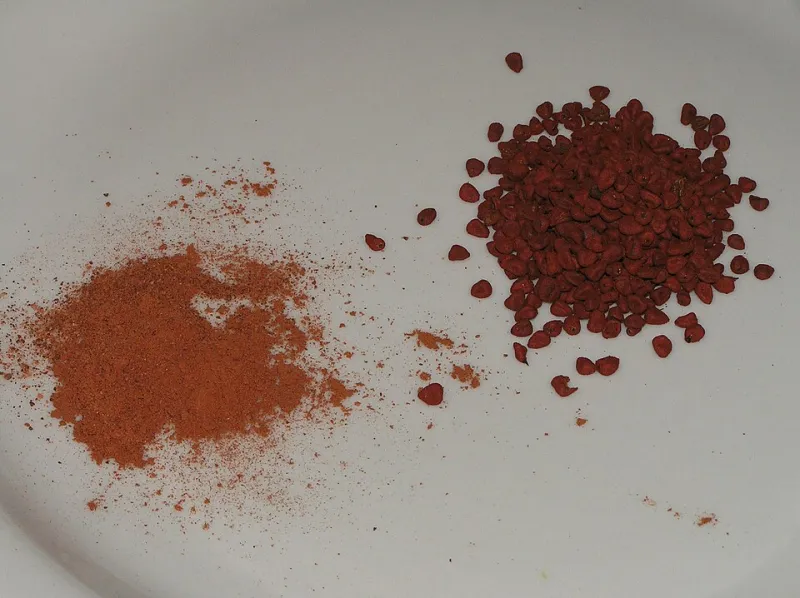
Photo: Ryan Snyder, CC BY 2.0, via Wikimedia Commons
If you've ever eaten a plate of golden-orange Panamanian rice and wondered what gave it that gorgeous, sunset-warm hue, the answer is almost certainly achiote. Also known as annatto, this small, brick-red seed comes from the Bixa orellana tree — a plant so deeply woven into Latin American and Caribbean food culture that entire generations of cooks have grown up treating it like a kitchen essential. In Panama, it's not a specialty item or a weekend-only ingredient. It's just there, quietly doing its thing in rice, stews, marinades, and sauces.
For American home cooks, though, achiote is still largely a mystery. It doesn't have the mainstream name recognition of cumin or paprika, and it rarely shows up in the kind of weeknight recipe content that floods food blogs. That's exactly why we're here to change the conversation.
What Is Achiote, Exactly?
Achiote seeds are harvested from the annatto tree, which grows abundantly across Central and South America, the Caribbean, and parts of Southeast Asia. The seeds themselves are tiny, angular, and coated in a deep reddish-orange pigment that transfers readily into oils and liquids. That pigment — bixin — is what gives achiote its legendary coloring power.
But here's what often gets lost in translation: achiote isn't just a natural food dye. It has a flavor all its own. It's subtle, earthy, and faintly nutty, with a very slight peppery warmth that doesn't announce itself loudly but absolutely shows up when you cook with it consistently. Think of it as a background vocalist who never steals the spotlight but makes the whole song sound better.
In Panamanian cooking, achiote shows up in two main forms: whole dried seeds and ground powder. You'll also find achiote paste — sometimes called recado — which blends the ground seeds with garlic, vinegar, and other spices into a concentrated block that's ready to dissolve into whatever you're cooking.
Why It Matters Beyond Sofrito
If you've spent any time exploring Panamanian cuisine, you've probably already encountered achiote as a component of sofrito — that foundational aromatic blend that starts so many dishes. And yes, it plays a role there. But limiting achiote to sofrito is like only using olive oil for salad dressing. The ingredient is capable of so much more.
One of the most satisfying ways to use achiote is in an infused oil. Heat a neutral oil — avocado or vegetable works great — over low heat, add a tablespoon or two of whole achiote seeds, and let them steep for about five minutes until the oil turns a vivid, amber-orange. Strain out the seeds, and what you're left with is a gorgeous, lightly flavored cooking oil that transforms everything it touches. Use it to sauté onions at the start of a rice dish, drizzle it over roasted vegetables, or brush it onto chicken before grilling. The color alone is enough to make people think you've been cooking all day.
For rice, achiote-infused oil is practically non-negotiable in a traditional Panamanian kitchen. Add it to the pot before your grains go in, and by the time the rice is done, you'll have a fluffy, golden dish that looks like it belongs on a restaurant plate.
Using Achiote in Marinades
Achiote paste is where things get really interesting for American home cooks who love to grill. The paste dissolves beautifully into citrus juices — orange, lime, and lemon all work — along with garlic, cumin, and a pinch of oregano. Rub this mixture over chicken thighs, pork shoulder, or fish fillets, let it sit for a few hours (overnight is even better), and then cook however you like.
The result is meat with a mahogany-red crust, a subtle earthiness in every bite, and a depth of flavor that's genuinely hard to achieve any other way. It's the kind of marinade that makes guests ask what your secret is, and the honest answer — annatto seeds from a Latin grocery store — tends to surprise people every time.
For fish, which is close to Panamanians' hearts given the country's two-ocean geography, a lighter achiote marinade works beautifully with corvina, snapper, or tilapia. Keep the citrus forward and the achiote restrained, and you'll get a bright, colorful dish that still lets the fish shine.
Where to Find Quality Achiote in the US
The good news: achiote is more accessible than ever in American grocery stores. Here's where to look:
- Latin grocery stores and bodegas — This is your best bet. Look for whole seeds in clear bags, ground powder in small jars, or paste (often sold as Sazón or recado rojo) in the spice aisle.
- International aisles at larger supermarkets — Many Walmarts, Kroger stores, and regional chains now carry Goya-brand achiote powder and seasoning packets.
- Online — Amazon, Walmart.com, and specialty Latin food retailers like MiTienda carry multiple forms of achiote with reliable quality. Look for brands that list annatto seeds or Bixa orellana as the primary ingredient with no unnecessary fillers.
- Indian and Southeast Asian grocery stores — Annatto is used across Filipino and Indian cooking too, so these stores sometimes carry it under different names.
When buying whole seeds, look for a deep, vibrant red-orange color. Pale or brownish seeds have likely lost their potency. For ground powder, check the date and opt for sealed packaging with a strong, earthy aroma when you open it.
How to Store It Right
Achiote seeds have a surprisingly long shelf life when stored properly — up to three years in an airtight container kept away from heat and direct light. Ground powder is a bit more temperamental; plan to use it within six months to a year for the best flavor and color payoff. Achiote paste should be refrigerated after opening and used within a few months.
One practical tip: if you make achiote-infused oil in batches, store it in a sealed jar in the fridge for up to two weeks. Having it ready to go makes weeknight cooking significantly faster.
Start Simple, Then Experiment
If you're new to achiote, the infused oil method is the easiest entry point. Make a small batch this weekend, use it to cook rice or sauté vegetables, and see how it changes your perception of the ingredient. Once you're comfortable with the flavor and color it brings, you'll start finding excuses to use it everywhere.
That's kind of how Panamanian cooking works, honestly. The ingredients aren't complicated or hard to find — they just require a little curiosity and a willingness to step outside the usual spice rack. Achiote is proof that one small seed, used with intention, can completely shift the character of a dish.
And once you've cooked with it a few times, you'll understand why Panamanian kitchens have never once considered going without it.