The Caribbean Side of Panama That Changed Everything — And Never Got the Credit
When most Americans think about Panamanian food, they picture the dishes that have crossed into the broader Latin American conversation — sancocho, arroz con pollo, patacones, ceviche. And those dishes are real and delicious and worth knowing. But they represent one side of a country that has two very different coastlines, two very different culinary histories, and a Caribbean food tradition that has been quietly extraordinary for over a century.
The Afro-Caribbean coast of Panama — stretching from the Colón province down through Bocas del Toro — is where that other story lives. And it's time more people knew it.
How the Caribbean Coast Got Its Own Kitchen
The population along Panama's Caribbean shore didn't arrive the same way as the settlers of the Pacific interior. Beginning in the mid-1800s and accelerating dramatically during the construction of the Panama Canal in the early 1900s, tens of thousands of workers emigrated from Jamaica, Barbados, Trinidad, and other British West Indian islands. They came to build a railroad and then a canal. They stayed, raised families, and built communities — and they cooked the food they knew.
What emerged wasn't a wholesale transplant of Caribbean cuisine onto Panamanian soil. It was something more interesting: a creolization. West Indian techniques and ingredients — coconut milk, breadfruit, salt cod, allspice, thyme, and Scotch bonnet peppers — merged with what Panama already had: tropical produce, fresh seafood, plantains, and yuca. The result was a coastal Panamanian food culture that looks and tastes almost nothing like what you'd find in Panama City's interior neighborhoods.
This community, known as Afro-Antillean Panamanians (or Afro-Antillanos), brought with them a culinary vocabulary that remains distinct to this day.
The Dishes That Tell the Story
Rondon is probably the most iconic expression of this tradition. It's a slow-simmered stew built on a base of coconut milk — not broth, not tomato, coconut milk — loaded with whatever the sea and the garden offered that day. Fish, shellfish, yuca, plantain, breadfruit, ñame, and dumplings all go in. The result is rich, slightly sweet, deeply savory, and completely unlike any other Panamanian dish. It's comfort food that carries an entire migration history in a single bowl.
Funchi is another cornerstone — a dense, cornmeal-based preparation similar to what you'd find in the Dutch Antilles or parts of West Africa, served alongside stewed fish or vegetables. It's the kind of dish that doesn't photograph dramatically but earns devoted loyalty from everyone who grows up eating it.
Rice and beans here aren't prepared the same way as in Panama's interior, either. Along the Caribbean coast, red kidney beans are cooked with coconut milk and thyme, a technique that echoes Jamaican rice and peas and signals clearly where this tradition's roots run deepest.
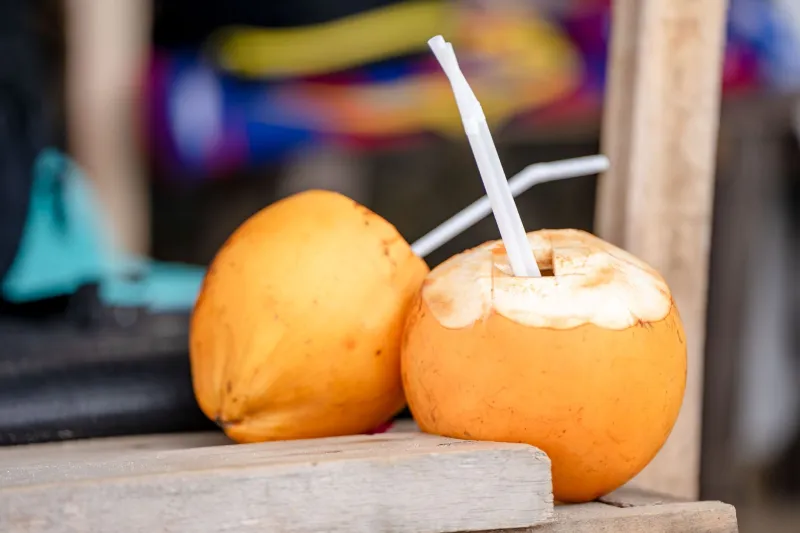
Bread coconut — a dense, slightly sweet bread made with fresh coconut — is baked in coastal homes and sold at small roadside stands. It's the kind of thing that disappears fast at any gathering, and it's one of those foods that feels immediately familiar even if you've never had it before.
Colón and the Crossroads
Colón, Panama's second-largest city and home to the famous Colón Free Zone, is the urban center of this Afro-Caribbean culinary tradition. It's also one of the most economically complex cities in Central America — a place where enormous international commerce flows through while many of its residents navigate significant poverty. The food culture there reflects that tension: deeply resourceful, intensely flavorful, and shaped by generations of people who knew how to make something extraordinary out of what was available.
Colón's market food scene — street vendors, family-run fondas, and small eateries — is where you'll find the most concentrated expression of this cooking. It's not a tourist destination in the conventional sense, which is part of why this food culture has remained so underreported.
Why American Audiences Should Know This
Here's the thing: this food culture didn't stay in Panama. Afro-Panamanian communities have established roots in several American cities — New York, Miami, and Los Angeles all have meaningful Panamanian diaspora populations, and within those communities, the Caribbean coastal cooking traditions have traveled too. If you're in a city with a Panamanian community and you haven't asked specifically about Caribbean-style Panamanian food, you may have been missing something remarkable.
Beyond diaspora communities, the flavors and techniques of Panama's Creole coast translate beautifully into American home cooking. Coconut milk-based stews are accessible and approachable. The spice profile — allspice, thyme, Scotch bonnet, and fresh ginger — is something most American cooks are at least partially familiar with through Caribbean cooking more broadly. The leap to Panamanian Creole isn't a difficult one.
A Culinary Tradition Worth Centering
The Afro-Caribbean contribution to Panamanian cuisine is not a footnote. It's not a regional curiosity. It's a full, living culinary tradition built by people who crossed an ocean, built a canal that changed global commerce, and in the process created a food culture that deserves the same recognition as any other strand of Panamanian cooking.
Rondon belongs in the same conversation as sancocho. Funchi belongs next to patacones. The coconut-braised fish of Bocas del Toro belongs beside the ceviche of Panama City.
At Paname Food, we think about Panamanian cuisine in its full complexity — and that means the Caribbean coast isn't an afterthought. It's half the story.