Forget the Spice Aisle: The Aromatics That Actually Make Panamanian Food Taste Like Panama
Here's a scenario that plays out in American kitchens all the time: someone finds a Panamanian recipe online, grabs what looks like the closest ingredient at their local supermarket, follows every step carefully — and ends up with something that tastes almost right. Close, but not it. Familiar, but flat.
The gap isn't technique. It's not the pot or the heat level or even the protein. It's the aromatics. The specific, sometimes hard-to-find, deeply culturally embedded flavor-builders that Panamanian cooks reach for instinctively — and that don't have clean one-to-one substitutes waiting on the shelf at Whole Foods.
Let's break down what's actually going on in a Panamanian spice rack, and why it matters more than most people realize.
Culantro Is Not Cilantro (This Cannot Be Said Enough)
If there's one thing to take away from this entire article, let it be this: culantro and cilantro are not the same plant. They're not even close relatives in terms of flavor intensity. Culantro — sometimes called recao, shadow beni, or long-leaf coriander — is a serrated, long-leafed herb that grows throughout Central America and the Caribbean. It tastes like cilantro the way a jalapeño tastes like a bell pepper: technically in the same family, but operating on a completely different level.
Culantro is sharper, more pungent, and holds up under heat in a way that cilantro simply doesn't. When Panamanian cooks add it to a slow-simmered pot of sancocho or stir it into a sofrito base, it doesn't wilt into the background — it anchors the whole dish. Swapping in cilantro gives you a lighter, more floral note that disappears the moment it hits a hot pan. The dish ends up tasting vaguely herby instead of grounded and complex.
You can find culantro at most Latin grocery stores, Caribbean markets, and increasingly at Asian supermarkets (it's also used in Southeast Asian cooking). Buy it fresh when you can. It freezes reasonably well if you can't use the whole bunch.
Oregano, But Not the Kind in Your Pasta Cabinet
Panamanian cooking leans on oregano — but the variety matters enormously. The dried Mediterranean oregano that most American cooks associate with pizza and pasta is a different plant than the fresh, softer-leafed oregano used throughout Latin America and Panama specifically. The Latin variety (sometimes labeled orégano criollo or Mexican oregano, though regional differences exist) has a more citrusy, slightly floral edge compared to the sharper, more bitter Mediterranean type.
In Panamanian dishes, oregano often shows up in marinades, in the base of rice dishes, and alongside other aromatics in braised meats. When you use the wrong type, the whole flavor profile tilts — suddenly your dish tastes more Italian-American than Isthmian. Fresh Latin oregano from a Caribbean or Latin market is ideal. If you can only find dried, look specifically for Mexican or Caribbean-labeled oregano rather than the generic Mediterranean stuff.
The Quiet Power of Ají Chombo
Panama has its own relationship with heat, and it's a nuanced one. Ají chombo is a small, round, intensely hot pepper — related to the habanero family — that shows up in Panamanian cooking more as a background note than a front-and-center fire bomb. It's used in sauces, condiments, and sometimes added whole to stews and removed before serving, leaving behind warmth without overwhelming spice.
The mistake American cooks make is substituting habanero or scotch bonnet directly, cup-for-cup. These peppers are similar in heat profile but have their own distinct fruitiness that can pull a dish in a Caribbean direction rather than a Panamanian one. Ají chombo has a slightly earthier quality. If you can find it fresh at a Latin market — and in cities with Panamanian communities you often can — use it. If not, habanero works as a stand-in, but use it conservatively and be aware that the flavor won't be identical.
Ajo and Cebolla: Garlic and Onion Done the Panamanian Way
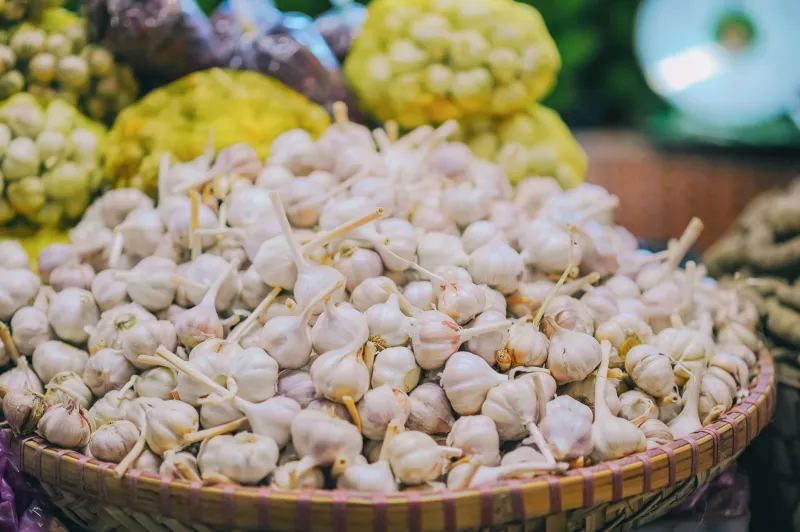
Okay, garlic and onion aren't exotic. But the way they function in Panamanian cooking is worth understanding. Panamanian sofrito — the aromatic base that starts an enormous number of dishes — typically uses white onion rather than yellow, and garlic is often pounded or finely minced rather than sliced. The goal is full integration, not caramelized sweetness. The aromatics are meant to dissolve into the fat and liquid, creating a flavor foundation rather than a textural element.
This matters because a lot of American recipes default to yellow onion and roughly chopped garlic. The result is a slightly sweeter, chunkier base that changes the texture and depth of whatever you're building. White onion is sharper, more assertive, and breaks down differently. It's a small shift that adds up.
Sazón Without the Shortcuts
Sazón is a spice blend, not a single ingredient — but it's worth addressing because so many American home cooks reach for the bright orange packets at the grocery store and call it a day. Those packets work in a pinch, but they lean heavily on annatto (for color) and MSG, which means they're adding color and umami more than a layered spice profile.
Authentic Panamanian-style sazón typically includes cumin, coriander, garlic powder, onion powder, and achiote (annatto), sometimes with oregano and a touch of black pepper. When you make it yourself — or find a version made without the shortcuts — you get a spice blend that seasons and colors your dish without the processed aftertaste. It takes about five minutes to mix a batch at home, and the difference in a rice dish or braised meat is immediate.
Where to Actually Find This Stuff in the US
The good news: most major American cities have Latin or Caribbean grocery stores where these ingredients are genuinely accessible. In places like Miami, New York, Houston, and Los Angeles, Panamanian expat communities have created demand for the real thing. Look for botanicas, Caribbean markets, and Latin supermarket chains like Bravo, Compare Foods, or Fiesta Mart.
For those outside major metros, online ordering has become a real option. Sites that specialize in Latin pantry staples often carry culantro (fresh or frozen), ají chombo in jarred or dried form, and Latin oregano. It's worth building a small stash of the authentic versions if you're serious about cooking Panamanian food at home.
The Bigger Point
Panamanian cuisine doesn't get the mainstream attention of Mexican or Cuban food in the US — which means its core ingredients haven't been widely adopted or approximated by mainstream grocery stores. That's actually a kind of preservation. The flavors stay specific. They stay true.
When you track down culantro instead of settling for cilantro, when you find Latin oregano and mix your own sazón, you're not just cooking more accurately — you're engaging with the actual flavor philosophy behind the food. Panamanian cooking is built on precision in its aromatics, not heat or heavy spicing. The complexity is subtle, layered, and deeply dependent on getting these building blocks right.
Once you do, that "almost right" feeling disappears entirely.