Forget Everything You Think You Know About Ceviche — Panama's Version Plays by Its Own Rules
Ceviche has had a serious glow-up in the US food scene. It's on every trendy coastal restaurant menu, all over cooking shows, and absolutely everywhere on social media. Which is great — raw fish marinated in citrus is a genuinely brilliant idea. But here's the thing: somewhere along the way, "ceviche" became a monolith. One dish, one style, one vibe. And that's doing a serious disservice to the version that Panama has been quietly perfecting for generations.
Let's set the record straight.
The Big Three Aren't Interchangeable
When Americans think ceviche, they usually think Peru. And fair enough — Peru is often credited as the spiritual home of the dish, with its leche de tigre, thick cuts of white fish, and heavy garnish of sliced red onion and aji amarillo. Mexican ceviche, on the other hand, leans sweeter and chunkier — tomato, cucumber, avocado, served with tostadas and a squeeze of lime that's almost an afterthought.
Panamanian ceviche is neither of those things. It's not trying to be. It comes from a different coastline, a different pantry, and a completely different relationship with acid and time.
The first thing you notice when you eat ceviche in Panama is how bright it tastes. Not spicy-bright, not sweet-bright — citrus-bright. The dominant acid here is naranja agria, or sour orange, often combined with limón (which in Panama refers to a small, intensely aromatic lime). This combination creates a marinade that's sharper and more complex than plain lime juice, with a slight bitterness that keeps the whole thing from feeling one-dimensional.
The Fish Actually Matters — A Lot
In Peru, you might find corvina or sea bass. In Mexico, shrimp ceviche is practically a national pastime. In Panama, the traditional go-to is corvina as well, but the way it's handled is completely different.
Panamanian ceviche is cut small. We're talking fine dice — sometimes almost minced — so that the acid can work quickly and evenly. This isn't a dish where you're meant to get big, meaty bites of fish. The texture is delicate, almost tender, and the marinade becomes part of the fish rather than just a coating around it.
Timing is everything here. Authentic Panamanian ceviche doesn't sit for hours. It doesn't need to. The small cut means the acid does its job fast — sometimes in as little as 15 to 20 minutes — and pulling it out at exactly the right moment is a skill that home cooks develop through feel, not timers. Leave it too long and the texture turns grainy and dull. Pull it too early and the fish still has a rawness that hasn't quite integrated with the marinade.
This is one of the reasons grandmothers who make this dish are so hard to replace. They know when it's ready by looking at it.
Ají Chombo: The Heat That Doesn't Shout
Here's where Panamanian ceviche really separates itself from the crowd. The heat source isn't jalapeño, it isn't serrano, and it definitely isn't the aji amarillo that defines Peruvian versions. It's ají chombo — a small, round, wrinkled pepper that belongs to the Scotch bonnet family.
Aji chombo is seriously hot. Like, stop-and-reconsider-your-choices hot. But in Panamanian ceviche, it's used with restraint. You're not after a five-alarm fish bowl. You want a low, slow warmth that builds after a few bites, something that makes you keep reaching back into the bowl without quite understanding why. Traditionally, the pepper is added whole or halved, allowed to infuse its heat into the marinade, and then removed — or left in as a warning to the uninitiated.
This technique of infusing rather than incorporating is subtle but crucial. It's the difference between a dish that hits you immediately and one that lingers.
The Onion Question
White onion, finely sliced or diced, is the standard. Not red onion — that's a Peruvian move. The white onion gets soaked in the citrus marinade and loses its raw edge, becoming almost sweet and translucent by the time the dish is ready to eat. Some cooks add a small amount of cilantro; others don't bother. There's no tomato. No avocado. No cucumber.
Panamanian ceviche is minimal by design. The restraint is intentional. Every ingredient has a job, and nothing is there for decoration.
Why the Instagram Version Always Gets It Wrong
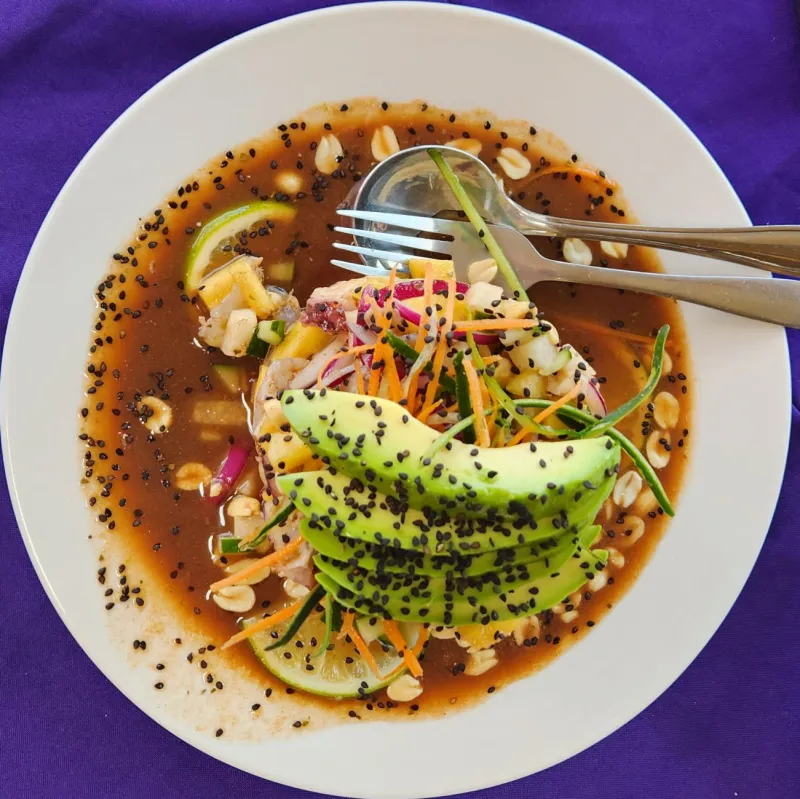
The aestheticized, heavily garnished ceviche you see on social media — the one with microgreens, edible flowers, and a dramatic leche de tigre pour — is a beautiful thing. But it has almost nothing to do with what ceviche means in Panama.
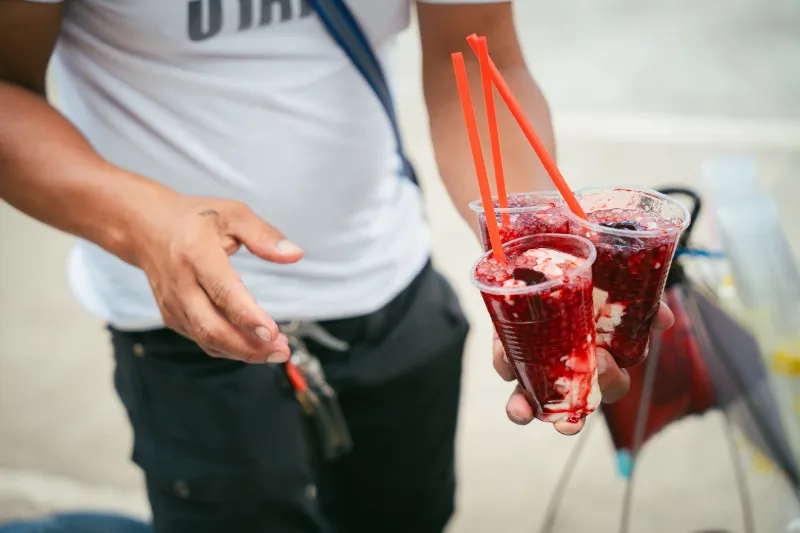
Authentic Panamanian ceviche is served in a plastic cup with a handful of soda crackers on the side. It's street food. It's something you eat standing up outside a market stall on a Tuesday morning, sweating in the heat, and thinking that this might be the best thing you've ever put in your mouth. The crackers aren't a garnish — they're functional, soaking up the extra marinade and giving you something to crunch between bites of fish.
When you strip away the presentation and focus on the flavor, that's where Panama's version shines. It doesn't need visual drama because it delivers on every sensory level that actually matters.
Making It at Home
If you want to try this in your own kitchen, here's the honest advice: source the best, freshest corvina or similar white fish you can find. Ask your fishmonger what came in today. Dice it small — think ¼-inch pieces at most. Use a combination of fresh-squeezed lime juice and, if you can find it, sour orange juice (some Latin grocery stores carry it bottled, or look for naranja agria). Add finely sliced white onion, a small amount of ají chombo or a Scotch bonnet pepper used for infusion only, and a pinch of salt.
Marinate for 15 to 20 minutes, taste as you go, and serve immediately with plain crackers. Don't overthink it. Don't dress it up. Just trust the process.
That's the Panamanian way — and once you've done it right, you'll understand why no other version quite compares.