What the Fish Vendors at Panama's Coastal Markets Know That You Don't
There's a woman at the Mercado de Mariscos in Panama City who can tell you everything you need to know about a fish just by pressing her thumb gently against its side. She doesn't need a label, a certification, or a "fresh catch" chalkboard sign. She just knows. That kind of knowledge — passed down through generations of coastal cooks — is exactly what separates a transcendent Panamanian ceviche from the sad, rubbery version you might have encountered at a chain restaurant somewhere off the highway.
For a lot of American home cooks, ceviche feels like a restaurant-only dish. Something too risky, too technical, too dependent on ingredients you can't reliably find. But here's the thing: Panamanian families make ceviche on weeknights. They make it for Sunday gatherings. They make it in apartments with no ocean view, using fish bought from a market stall they've visited every week for years. The secret isn't some exotic technique. It's a relationship — with your ingredients, your supplier, and a few key pieces of knowledge that most American grocery stores have never bothered to teach you.
The Market Mindset: Freshness Is a Habit, Not a Luck
In Panama, buying seafood isn't a passive activity. You don't just grab whatever looks okay under fluorescent lighting. You show up early, you look the vendor in the eye, and you ask questions. What came in this morning? What's the corvina like today? Is the shrimp from the Pacific side or the Caribbean?
This habit of active engagement is the first thing American cooks can adopt right now, without changing a single thing about where they shop. Whether you're at a supermarket fish counter, a local fishmonger, or an Asian grocery market — all places where the seafood tends to move faster and fresher — start asking. The good vendors will respect it. The ones who can't answer basic questions about their catch are telling you something important.
For ceviche specifically, you want fish with firm, translucent flesh, a clean ocean smell (not fishy, not sour), and bright, clear eyes if you're buying whole. In Panama, corvina — a mild, white-fleshed sea bass common along the Pacific coast — is the gold standard for ceviche. In the US, you can substitute red snapper, flounder, halibut, or even a high-quality tilapia. What matters more than the species is the condition.
Timing Your Purchase Like a Pro
Panamanian market vendors will tell you: the best fish is bought before noon. That's not superstition — it's logistics. Most coastal markets receive their deliveries in the early morning hours, which means the fish sitting out at 7 a.m. has been out of the water for the shortest possible time. By mid-afternoon, even decent fish has lost some of its edge.
Apply this same logic stateside. Ask your fishmonger what days their deliveries arrive. For most independent fish markets and grocery stores in the US, that's Tuesday, Thursday, and Friday — timed around weekend demand. Plan your ceviche nights around those days, and you're already ahead of 90% of home cooks.
If you're buying online — and yes, there are excellent mail-order seafood suppliers now, including community-supported fishery programs and direct-from-boat services — look for companies that ship overnight and freeze immediately after catch. Flash-frozen seafood, thawed properly in the refrigerator overnight, can be just as good as "fresh" fish that's been sitting in a display case for two days.
Building the Relationship (Yes, Really)
This part sounds old-fashioned, but it works. In Panamanian culture, the relationship between a family and their market vendor is genuinely meaningful. The vendor knows your preferences. They set aside the best piece before it hits the general display. They tell you when something isn't worth buying that day.
You can build a version of this in any American city. Find one fishmonger — at a local market, a specialty grocer, or even the seafood counter at a well-run grocery store — and become a regular. Introduce yourself. Remember their name. Buy from them consistently, even when it's just for a simple weeknight dinner. Over time, that relationship pays dividends in access, information, and quality.
The Lime Cure: What It Does and What It Doesn't Do
Let's address the elephant in the room. Lime juice does not "cook" fish in any traditional sense. The acid denatures the proteins on the surface of the flesh, changing its texture and appearance — but it does not kill pathogens the way heat does. This is why the quality of your raw fish is non-negotiable, not optional.
In Panama, ceviche is typically marinated for a shorter time than you might expect — sometimes as little as 10 to 15 minutes for very fresh, finely diced fish. The goal isn't to turn the fish opaque all the way through. It's to lightly cure the exterior while keeping the interior tender and almost silky. Over-marinating is one of the most common mistakes American home cooks make, resulting in a tough, chalky texture that has nothing to do with authentic Panamanian ceviche.
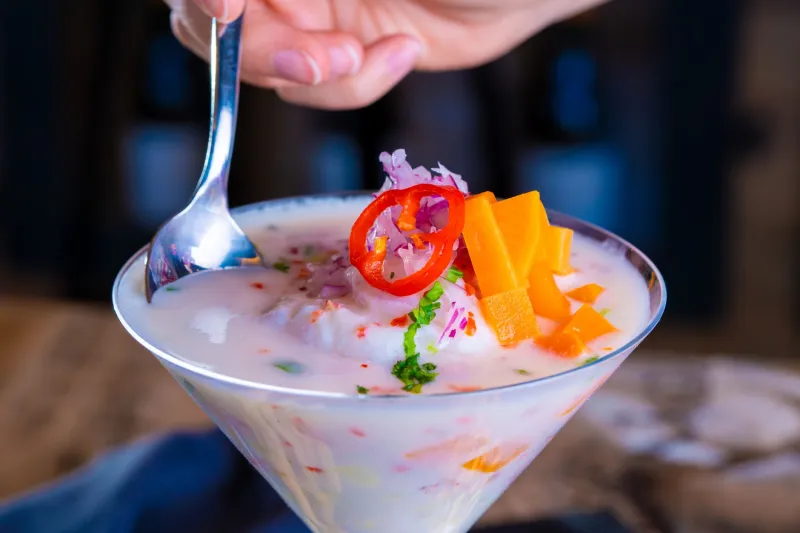
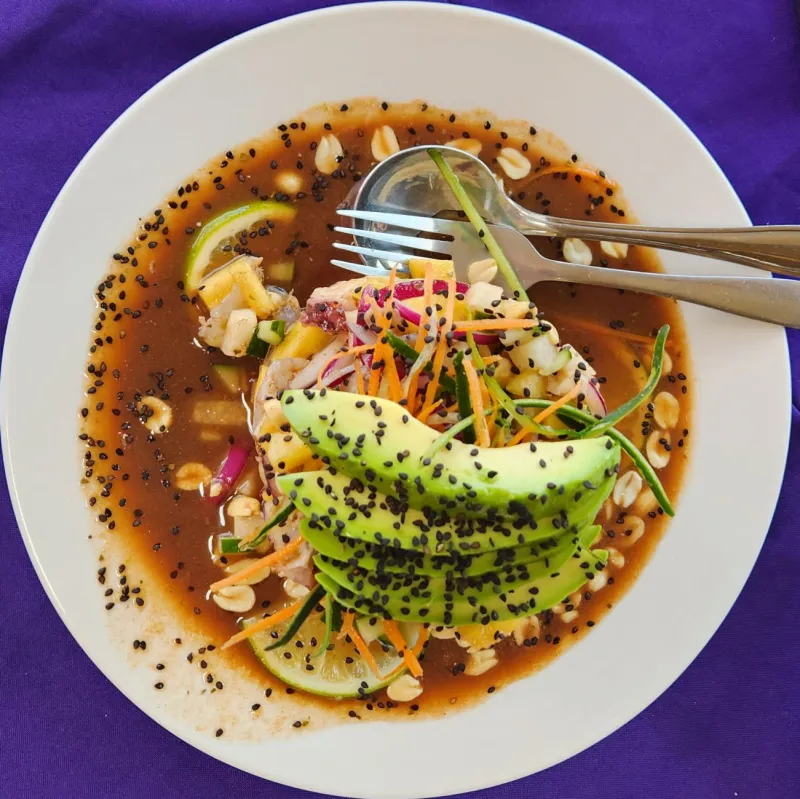
The classic Panamanian version uses fresh lime juice (not bottled — ever), finely diced white onion, ají chombo or another fresh chile, cilantro, and a pinch of salt. Some cooks add a splash of Worcestershire. Some add a little celery for crunch. What you won't find is a laundry list of competing flavors. The fish is the point.
Finding Ingredients in the US
Beyond the fish itself, the supporting cast matters. Fresh limes are easy. Cilantro is everywhere. The trickier item is the chile. Ají chombo is a Scotch bonnet-type pepper with serious heat and a fruity undertone. In the US, look for Scotch bonnets or habaneros at Caribbean grocery stores, Latin markets, or online. If you want the flavor without the full heat, remove the seeds and membrane, or use a small amount.
For shrimp-based ceviche — also popular in Panama — head to a store with a high turnover of shell-on, head-on shrimp. The shells and heads carry a lot of flavor, and buying whole shrimp is a good indicator of freshness. Gulf shrimp from the US are an excellent domestic option.
The Bigger Picture
Panamanian ceviche isn't complicated. It's confident. It relies on good ingredients, restrained technique, and the kind of knowledge that comes from paying attention over time. You don't need to fly to Panama City to eat it well — you just need to start shopping like someone who cares about what's in the bowl.
That woman at the Mercado de Mariscos didn't learn her craft from a cooking show. She learned it by showing up, asking questions, and trusting her senses. You can do the same thing, starting this weekend.