Throw a Backyard Party That Nobody Will Stop Talking About — Panamanian Street Food Style
Every summer, the same script plays out at backyard parties across America. Someone brings a store-bought veggie tray. Someone else fires up burgers. The guacamole disappears in ten minutes, and by 7 p.m., everyone's staring at a table that looked better in theory than in practice.
What if you flipped the whole thing?
Panamanian street food has fed crowds for generations — not in restaurants, but on sidewalks, at markets, and during festivals where the goal is simple: bold flavors, shareable portions, and zero fuss. Sound familiar to what a good host actually needs? That's because it is. And once you understand how these dishes work, you'll realize they were practically designed for American summer entertaining.
What Makes Panamanian Street Food Different
Street food in Panama isn't a shortcut version of fine dining. It is the culture. Dishes like empanadas de maíz, patacones, and ceviche de corvina didn't get popular because they were trendy — they got popular because they're genuinely, deeply satisfying in a way that's hard to explain until you've had them.
The flavor profile leans into something American palates tend to love without always knowing where it comes from: savory depth, citrus brightness, a little richness from frying, and fresh herbs that cut through everything. There's no overwhelming heat chasing you down. Just layers of flavor that keep you reaching for more.
For a host, that balance is gold. You're not gambling on whether your guests can handle spice. You're serving food that almost everyone will enjoy — and that almost nobody will have tried before.
Patacones: The Crowd-Pleaser You Didn't Know You Needed
Let's start with patacones, because they're the unsung hero of this whole conversation.
Made from green plantains that are sliced, fried, smashed flat, and fried again, patacones are essentially a blank canvas with a satisfying crunch and a subtly starchy flavor that's more complex than a potato chip but just as addictive. In Panama, they're topped with everything from shredded beef to ceviche to simple hogao — a slow-cooked tomato and onion sauce that tastes like it took way more effort than it actually did.
For entertaining, think of patacones as your edible serving vessels. Set up a topping bar with small bowls of hogao, pickled red onions, avocado mash (not guacamole — just keep it simple with lime and salt), and pulled chicken or pork seasoned with cumin and achiote. Guests build their own. The table becomes interactive. Conversation starts itself.
Make-ahead tip: Fry your patacones through the first fry earlier in the day, then smash and refrigerate them. When guests arrive, the second fry takes only a few minutes and they come out perfectly crisp. You look effortless. You're welcome.
Empanadas: Handheld, Make-Ahead, and Endlessly Versatile
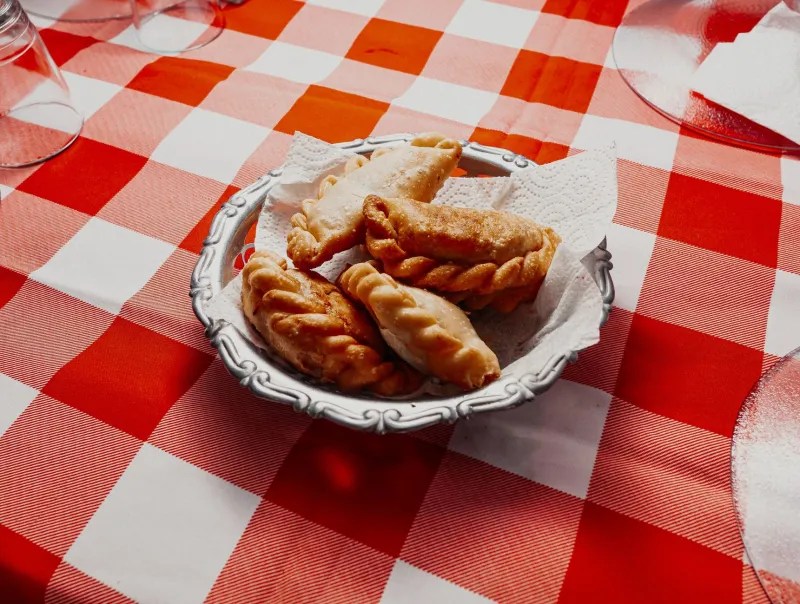
Panamanian empanadas are different from their South American cousins in one key way: they're often made with masa (corn dough) rather than wheat pastry, which gives them a heartier texture and a slightly sweet, earthy flavor that pairs beautifully with savory fillings.
The fillings themselves are where you can have fun. Classic options include seasoned ground beef with olives and hard-boiled egg, chicken with sofrito, or even a simple cheese filling that crisps up beautifully when pan-fried or baked.
For a dinner party, empanadas work as a passed appetizer or a buffet anchor. They hold their heat reasonably well, they're easy to eat standing up, and they photograph beautifully if you're the type who likes to document your hosting wins for social media.
Style them on a wooden board or slate tile with a small bowl of ají chombo sauce on the side (Panama's answer to hot sauce — use sparingly, it has personality). Add a few sprigs of fresh cilantro and a halved lime for color. That's it. Simple, intentional, and very, very good.
Make-ahead tip: Empanadas can be assembled and frozen up to two weeks in advance. Pull them straight from the freezer and fry or bake as needed. The dough actually holds up beautifully.
Ceviche: The Centerpiece That Does the Work for You
If patacones are the crowd-pleaser and empanadas are the workhorse, ceviche is the showstopper.
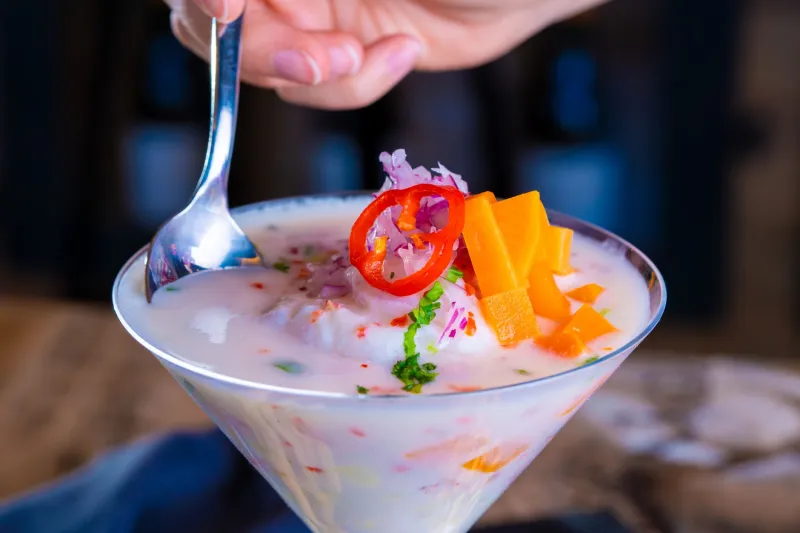
Panamanian ceviche de corvina is made with fresh white fish — sea bass is a great substitute in the US — cured in citrus juice (typically lime and a little lemon), tossed with finely diced onion, ají amarillo or mild peppers, cilantro, and a touch of salt. It's bright, clean, and a little electric on the palate.
The key difference from Peruvian-style ceviche is that Panamanian ceviche tends to marinate longer, resulting in a more fully "cooked" texture that's less intimidating to guests who might be wary of raw fish. The citrus does all the work.
For entertaining, serve it chilled in a large, shallow bowl with a spoon for self-serving, surrounded by plain crackers or — full circle — small patacones. It's visually striking, inherently elegant, and requires almost no last-minute effort since it needs to be made ahead anyway.
Make-ahead tip: Prepare the ceviche up to four hours before your party. Any longer and the texture gets too firm. Keep it refrigerated and stir gently before serving.
Putting It All Together: The Panamanian Street Food Spread
Here's a simple framework for building a full Panamanian street food table that feels cohesive rather than chaotic:
- Anchor: A large bowl of ceviche at the center
- Build-your-own station: Patacones with toppings laid out in small bowls
- Passed or plated: Empanadas on a board with dipping sauce
- Drinks: Fresh agua de saril (hibiscus drink) or a simple limeade to keep things authentic and refreshing
- Finishing touch: Fresh lime wedges and cilantro scattered across the table
The whole setup can be prepped largely in advance, leaving you free to actually enjoy your own party. And when someone inevitably asks "what is this?" you'll have a story to tell — because Panamanian food always comes with one.
That's the real secret here. It's not just about the food. It's about bringing something to the table that your guests haven't experienced before, rooted in a culinary tradition that's been perfecting the art of feeding a crowd for a very long time.