Two Oceans, Two Kitchens: How Panama's Coasts Cook the Same Fish Completely Differently
Most people think of Panama as a passageway — something you cross to get somewhere else. But if you've ever eaten a bowl of corvina ceviche in Panama City and then, a few hours later, sat down to a coconut-stewed fish on the Caribbean coast, you already know that Panama isn't a corridor. It's two completely separate culinary worlds stitched together at a narrow strip of land.
The Canal gets all the attention. But the real divide worth talking about? It's the one happening in home kitchens and fishing villages on either side of it.
The Geography That Makes Panama's Food Unlike Anywhere Else
Panama sits at the southeastern end of Central America, curving east-to-west in a way that confuses even longtime visitors. Because of that curve, the Pacific coast actually faces south, not west — and the Caribbean coast faces north. What that means for seafood is everything.
The Pacific side is cooler, fed by deep-water upwellings that push nutrient-rich currents toward the surface. Fish here are leaner, firmer, and more intensely flavored. The waters off the Azuero Peninsula and the Gulf of Chiriquí produce corvina, pargo (red snapper), and a rotating cast of seasonal catches that fishing families have built entire culinary traditions around.
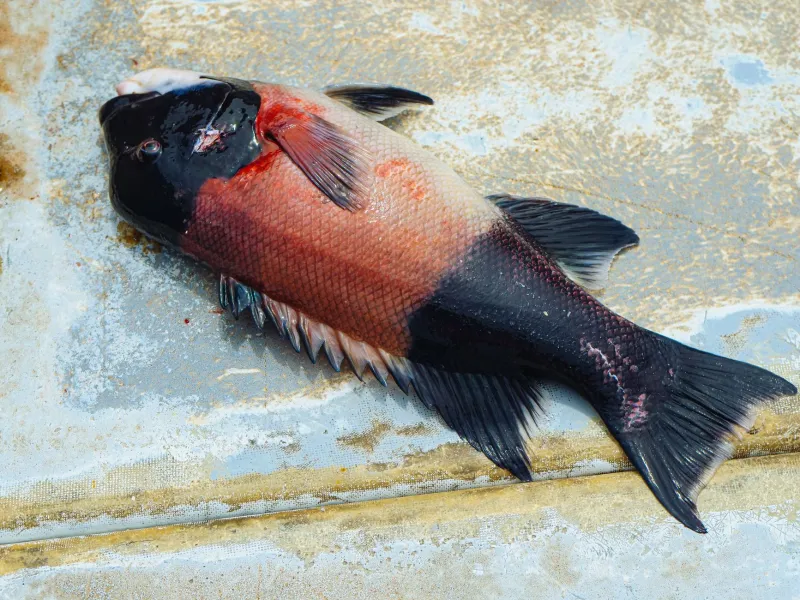
The Caribbean side runs warmer and shallower, particularly around Bocas del Toro and the Comarca Ngäbe-Buglé coastline. The reef systems there support different species entirely — parrotfish, sea bass, and a variety of shellfish that don't show up in Pacific markets. The slower, warmer water changes the texture of the fish and, more importantly, it shaped the way people learned to cook it.
The Pacific Side: Acid, Citrus, and the Art of Restraint
If you've spent any time in Panama City, you've encountered Pacific-style seafood cooking — probably without realizing it. The capital sits on the Pacific, and the food reflects that. Ceviche here is built on leche de tigre, the punchy marinade of lime juice, onion, ají chombo, and cilantro that "cooks" raw fish through acid alone. It's bright, sharp, and intentionally simple.
The philosophy on this side of the country is one of restraint. You let the fish speak. A piece of fresh corvina doesn't need much — maybe a little culantro (the broader-leafed cousin of cilantro that's a pantry staple in Panamanian cooking), some salt, a squeeze of lime. The Pacific fishing communities around Pedasí and Las Tablas have been doing this for generations, and the food reflects a confidence that comes from knowing your ingredients are exceptional.
Seafood soups on the Pacific side tend to be clear or lightly brothed — think sopa de mariscos with a clean, deeply savory base that doesn't compete with the shellfish floating in it. The goal is always to highlight what came out of the water that morning, not to mask it.
For US cooks trying to replicate this at home, the lesson is counterintuitive: buy the best fish you can find, and then get out of the way. Farmers market fish, or anything you can source from a reputable fishmonger rather than a grocery store freezer case, will get you closer to that Pacific coastal flavor than any technique will.
The Caribbean Side: Spice, Coconut, and a History That Arrived by Ship
Cross the country — it's only about 50 miles at the narrowest point — and the kitchen changes completely.
The Caribbean coast of Panama carries the fingerprints of multiple migrations. Indigenous Ngäbe and Kuna communities built their food traditions around what the reef and the jungle provided. Then came the Spanish colonial period, which brought African enslaved people whose culinary knowledge transformed coastal cooking across the entire Caribbean basin. In the late 1800s and early 1900s, tens of thousands of Afro-Caribbean workers — many from Jamaica and Barbados — arrived to build the Canal, and they brought their food with them.
The result is a coastal cuisine that is layered, spiced, and deeply aromatic in a way the Pacific side simply isn't. Coconut milk shows up everywhere. So does thyme, allspice, and scotch bonnet peppers — the Caribbean heat that's fundamentally different from the fruity punch of ají chombo. A fish stew in Bocas del Toro might start with a sofrito base, add coconut milk halfway through, and finish with a handful of culantro and a squeeze of lime. It's a completely different grammar than the Pacific approach, even when the main ingredient is the same species.
Rondón — a slow-cooked coconut milk stew with fish, yuca, plantain, and whatever else is around — is probably the most iconic Caribbean Panamanian dish most Americans have never heard of. It's the kind of thing that takes three hours and feeds a whole family, and it tastes like the ocean filtered through a spice rack that has centuries of history behind it.
Why This Matters for How You Cook at Home
Understanding this divide gives US home cooks something genuinely useful: a framework.
When you're working with firm, fresh, high-quality fish — a beautiful piece of halibut from the Pacific Northwest, say, or fresh mahi-mahi from a Florida fish market — lean Pacific. Acid-forward preparations, minimal interference, clean flavors. Let the fish be the star.
When you're working with more modest ingredients, or when you want something warming and complex — a weeknight fish stew, a slow braise, something that feeds a crowd — lean Caribbean. Coconut milk, allspice, thyme, scotch bonnet. Build the flavor from the bottom up and let the fish absorb it.
Panama figured this out not through culinary school, but through centuries of people cooking with what they had, where they were. The ocean told them what to do, and they listened.
The Canal as a Culinary Metaphor
There's something almost poetic about the fact that the Canal — the thing that made Panama famous — connects two bodies of water that produce completely different food cultures. It's a man-made link between two natural worlds that have their own logic, their own rhythms, their own flavors.
When you eat Panamanian seafood with this in mind, you're not just eating dinner. You're tasting geography. You're tasting the decision a fishing family made about what to do with that morning's catch based on where they live, what their grandparents cooked, and what the water around them provides.
That's what makes Panamanian coastal cooking worth paying attention to — not just as a curiosity, but as a genuine culinary tradition that has as much to teach as anywhere else in Latin America. Maybe more, because it's doing double duty.
Two oceans. Two kitchens. One very small, very remarkable country.