The Clock Is the Secret Ingredient: Mastering the Timing Behind Panamanian Sofrito
If you've ever followed a sofrito recipe to the letter — right ingredients, right amounts, right pan — and still ended up with something that tasted flat, a little sharp, or just not quite there, you're not alone. And you're probably not doing anything wrong with the ingredients themselves.
The missing piece is almost always timing.
Panamanian sofrito is one of those things that looks deceptively simple from the outside. Aromatics, fat, heat. How complicated can it be? But spend time in the kitchen of someone who really knows what they're doing, and you start to notice something: they're not just dumping everything in at once. They're watching. Waiting. Adjusting. The whole process has a rhythm to it, and that rhythm is what separates a sofrito with genuine depth from one that just tastes like cooked onions.
Let's break it down.
Why Order of Entry Changes Everything
Think of building sofrito less like a recipe and more like a conversation — and in any good conversation, the order in which things are said matters enormously.
In traditional Panamanian cooking, the fat goes in first, and it needs to be properly heated before anything else touches the pan. Not smoking, not barely warm — somewhere in that sweet spot where a drop of water sizzles and disappears immediately. This is the foundation. Rushing past it means your aromatics will steam instead of sauté, and that's a fundamentally different flavor outcome.
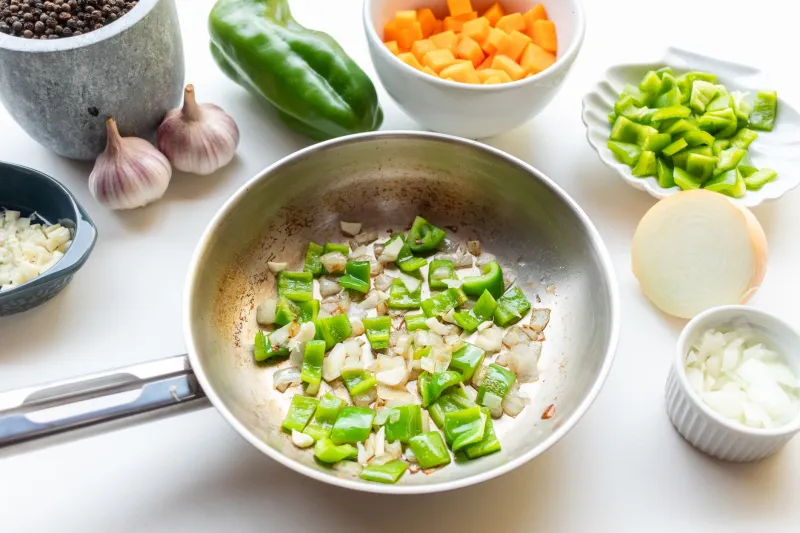
Onions come in next, and they deserve more time than most American home cooks give them. We're talking a solid 6 to 8 minutes over medium heat, stirring occasionally, until they've gone genuinely translucent and started to soften at the edges. This isn't about caramelizing them — it's about coaxing out their natural sweetness while mellowing the raw bite. Underdone onions in a sofrito will haunt your finished dish with a harsh, almost metallic edge that no amount of seasoning can fix later.
Once the onions are where they need to be, that's when you introduce your ají chombo or sweet peppers. Peppers release moisture as they cook, and dropping them into an already-softened onion base means that moisture works with the fat rather than fighting it. Give them another 4 to 5 minutes.
The Garlic Moment — And Why It's Non-Negotiable
Garlic is arguably the most timing-sensitive ingredient in the entire sofrito equation, and it's where a lot of cooks go wrong.
Adding garlic too early — alongside the onions, say — almost guarantees it'll burn before everything else is ready. Burnt garlic doesn't just taste bitter on its own; it lends a bitter undertone to everything it touches, and there's no coming back from that. Adding it too late, on the other hand, means it never fully integrates. You end up tasting garlic at the dish rather than tasting it through the dish.
The right window is about 60 to 90 seconds before you add your tomatoes or liquid. Drop in minced or smashed garlic, let it sizzle and become fragrant — you'll know it's ready when the sharp raw smell gives way to something toasty and sweet — then move quickly to the next step. That brief, controlled bloom is where the magic happens.
Temperature Control: The Overlooked Variable
Here's something that rarely gets discussed in sofrito tutorials: maintaining the right temperature throughout the entire process matters just as much as the sequence.
The instinct when cooking aromatics is to crank the heat and get things moving. Resist it. High heat causes the outside of your ingredients to cook faster than the inside, which means you get surface color without actual flavor development in the core. Medium heat — sometimes even medium-low — gives everything time to cook through evenly, releasing complex compounds that high heat would simply burn off.
A useful rule of thumb: if things are popping and spitting aggressively, your heat is too high. You want a steady, active sizzle — the kind that sounds like a gentle conversation rather than an argument.
If you notice the pan getting dry before your aromatics are fully cooked, don't panic and don't add water. Add a small splash of oil or lower the heat slightly. Water will drop the temperature dramatically and shift your sofrito from sautéing to steaming, which changes both texture and flavor.
The Resting Phase Nobody Talks About
Once your sofrito is built, there's one more timing element that gets almost zero attention: letting it rest before you use it.
Pulling finished sofrito off the heat and immediately incorporating it into a stew or rice dish cuts short the final stage of flavor development. Even just 5 minutes of resting allows the residual heat to continue working, the oils to settle and absorb the aromatics, and the overall profile to mellow and unify. It's a small thing, but it's the difference between a sofrito that tastes like its individual parts and one that tastes like a single, cohesive flavor.
If you're making sofrito in bulk — which, honestly, you should be — store it in an airtight container in the fridge for up to a week, or freeze it in tablespoon-sized portions for whenever you need it. The flavors actually continue to develop during storage, so day-two sofrito often tastes better than fresh.
Putting It All Together
Here's a simplified timing guide you can keep next to the stove:
- 0:00 — Heat fat over medium until shimmering
- 0:30 — Add onions, cook 6–8 minutes until soft and translucent
- 7:00 — Add peppers, cook 4–5 minutes
- 12:00 — Add garlic, cook 60–90 seconds until fragrant
- 13:30 — Add tomatoes or liquid, reduce heat, simmer 5–7 minutes
- 20:00 — Remove from heat, rest 5 minutes before using
Notice there's no rushing, no multitasking that distracts you from the pan, no skipping steps because dinner needs to be on the table in 20 minutes. Great sofrito asks for your attention, and it pays you back generously.
Patience as a Culinary Philosophy
There's something bigger going on here than just cooking technique. The patience built into traditional Panamanian sofrito reflects a broader philosophy about food — one that treats the process as part of the value, not an obstacle to the outcome. In a culture where meals are social events and kitchens are gathering places, the time you spend building flavor is time well spent.
For American home cooks who've been conditioned to equate speed with efficiency, this can feel counterintuitive. But once you taste the difference — once you experience that deep, rounded, fully integrated flavor that only comes from doing it slowly and in the right order — the extra 15 minutes starts to feel less like a sacrifice and more like the whole point.
Your sofrito is ready when it's ready. And when it's ready, everything else follows.