What You Lose When You Take the Easy Way Out: A Case for Scratch-Made Panamanian Cooking
The Jar on the Shelf Isn't Lying, But It's Not Telling the Whole Truth
Walk down the Latin food aisle of almost any American grocery store and you'll find them: little jars of sofrito, pre-blended sazón packets, bottled adobo mixes, and vacuum-sealed seasoning pastes promising "authentic Latin flavor" right on the label. And look — nobody is going to shame you for reaching for one. Life is busy. Weeknights are brutal. Sometimes dinner just needs to happen.
But if you've ever eaten real Panamanian food — the kind made in someone's kitchen with a wooden spoon and no shortcuts in sight — you already know that something is missing from those jars. You might not be able to name it immediately, but you feel it. The flavor lands differently. It's flatter somehow, like a song played without the bass line.
This isn't about being a food snob. It's about understanding what Panamanian cooking actually is, and why the scratch-made approach isn't just tradition for tradition's sake.
Sofrito Is a Living Thing. The Jar Version Isn't.
Let's start with sofrito, because it's the foundation of so much Panamanian cooking that getting it wrong ripples through every dish it touches.
Real Panamanian sofrito — the kind built on culantro, ají chombo, onion, garlic, and tomato, cooked low and slow until the whole thing transforms — is a layered, evolving thing. The aromatics don't just blend together. They cook into each other. The sugars in the onion caramelize slightly. The culantro loses its raw edge and becomes something deeper and more rounded. The tomato breaks down and thickens the whole mixture into something with body and complexity.
Store-bought sofrito skips all of that. It's usually raw-blended and preserved, which means you're getting the ingredients without the alchemy. The flavor is sharp where it should be mellow, thin where it should have weight. When you build a rice dish or a stew on top of that base, the whole thing starts on shaky ground.
Making sofrito from scratch takes maybe 25 minutes, most of which is hands-off while it simmers. That's not intimidating — that's just cooking.
The Problem With Pre-Made Seasoning Packets
Sazón packets and all-purpose Latin seasoning blends are convenient, sure. But they're also built for a generic "Latin" palate, not a specifically Panamanian one. Most of them lean heavily on MSG, artificial coloring (that fluorescent orange-yellow is usually FD&C dye, not real achiote), and salt — a lot of salt. They're engineered to taste bold, not to taste authentic.
Panamanian seasoning is more restrained and more precise than that. It's about balance: the earthy warmth of real achiote seeds bloomed in oil, the brightness of fresh herbs, the subtle heat of pepper that builds slowly rather than hitting you all at once. When you dump in a seasoning packet, you're not getting that balance. You're getting volume without nuance.
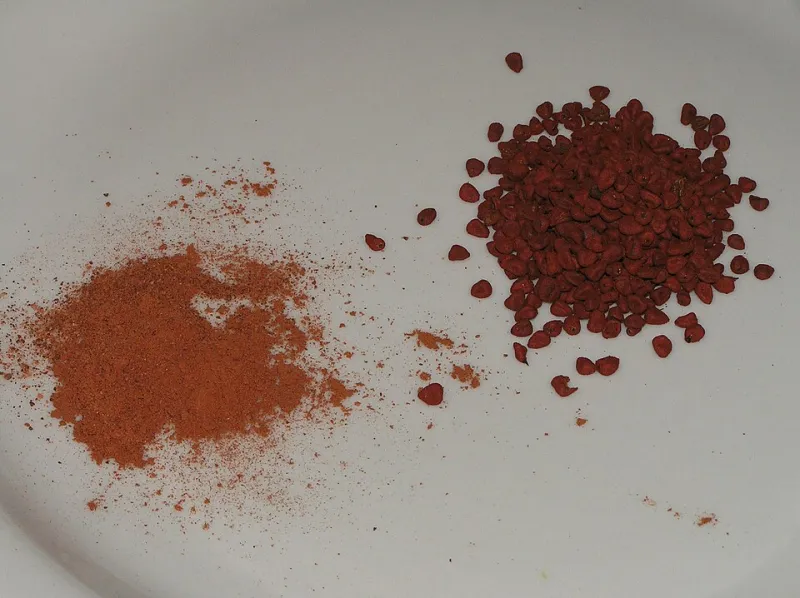
Real achiote oil, made by gently warming annatto seeds in a neutral oil until the color blooms out into a deep amber-orange, takes about five minutes. It keeps in the fridge for weeks. That five minutes buys you something no packet can replicate: a clean, natural color and a faintly nutty, peppery depth that sits underneath your food rather than on top of it.
What Tradition Actually Means in the Kitchen
Here's something worth sitting with: Panamanian cuisine is the product of centuries of layered cultural influence — Indigenous, African, Spanish, Caribbean, and even a touch of American and Asian from the Canal era. Every ingredient and technique that survived that long did so because it worked. Not because it was easy. Because it produced something worth eating.
When we talk about cooking from scratch, we're not asking you to romanticize poverty or pretend that convenience is evil. We're saying that the methods exist for a reason. Slow-cooking your sofrito develops flavor compounds that fast cooking and preservation simply can't replicate. Blooming whole spices in oil releases aromatic oils that pre-ground seasonings have already lost. These aren't arbitrary rituals — they're functional steps that produce measurably better food.
There's also something cultural at stake that's harder to quantify. Food carries memory. It carries identity. When a Panamanian grandmother makes sancocho, she's not just making soup. She's passing down a sensory experience — the smell of culantro in a hot pot, the color of the broth after the chicken has been in there for an hour, the way the yuca softens but holds its shape. A packet of seasoning and a shortcut sofrito can't carry any of that. It produces something that resembles the dish without actually being it.
Practical Encouragement for the Home Cook
If you've been relying on shortcuts because scratch cooking feels out of reach, here's the honest truth: most of the foundational elements of Panamanian cooking are simpler than they look.
A proper sofrito comes together with a blender and a skillet. Achiote oil needs a small saucepan and five minutes of attention. Fresh culantro and ají chombo are increasingly available at Latin grocery stores and Caribbean markets across the US, and growing your own is genuinely achievable in most American climates during warmer months.
The investment isn't really in time — it's in attention. Panamanian cooking rewards you when you pay attention to what's happening in the pot. When you smell the onion going soft and sweet. When you see the color shift in the oil. When the sofrito stops smelling raw and starts smelling like something you want to eat.
Start with one thing. Make your sofrito from scratch this weekend. Keep it in the fridge and use it through the week. Notice how your rice tastes different. Notice how your beans carry more depth. Let that be the thing that convinces you, because it will.
The Point Isn't Perfection. It's Authenticity.
Nobody is asking for a Michelin-level performance every Tuesday night. But there's a real difference between a home-cooked Panamanian meal that was built from honest ingredients and one that was assembled from convenience products.
The difference shows up in the flavor. It shows up in the way the dish makes you feel when you eat it. And if you're cooking for family — especially kids who are growing up in the US and might not have direct access to Panamanian culture — it shows up in what they learn about where their food comes from.
The jar on the shelf isn't evil. But it's also not the point. The point is the cooking. The process. The smell of something real coming together in your kitchen.
That's what Panamanian food has always been about, and no shortcut gets you there.