Bring Arroz Con Pollo to the Potluck and Watch It Vanish: The Only Recipe Rulebook You Need
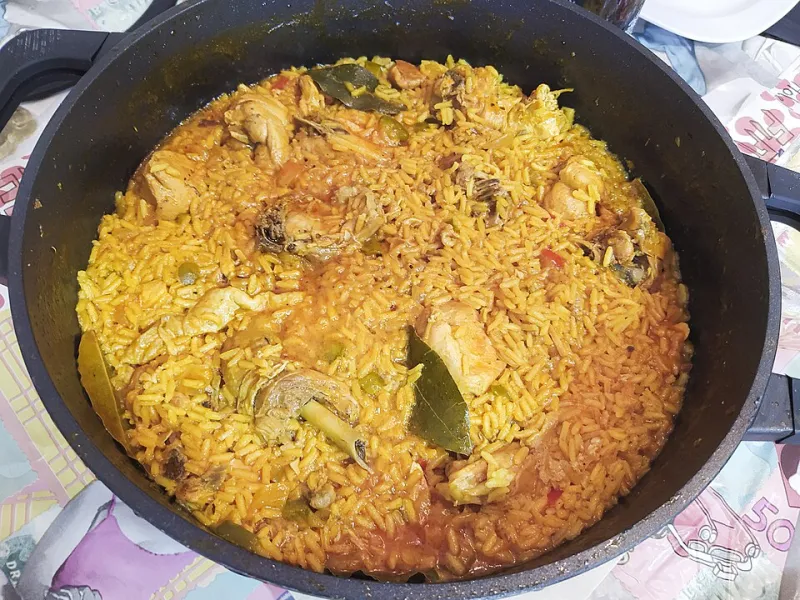
Photo: El Mono Español, CC BY-SA 4.0, via Wikimedia Commons
Let's settle something: if you're still bringing seven-layer dip to the Super Bowl party, the family reunion, or the office potluck, you're leaving glory on the table. Arroz con pollo — Panama's golden chicken-and-rice centerpiece — is the dish that gets scraped clean before the folding chairs are even put away.
It's cheap to make, feeds a battalion, travels well, tastes great at room temperature, and improves as it sits. Name another potluck dish with that résumé. We'll wait.
But here's the catch: there's a wide gulf between mediocre arroz con pollo and the kind people follow you to the parking lot about. The difference isn't a secret ingredient. It's technique. Let's fix yours.
Mistake #1: Treating the Rice Like an Afterthought
The soul of arroz con pollo is rice that's cooked in flavor, not beside it. Every grain should drink up chicken stock, sofrito, and the fat rendered from browned chicken. Rice cooked separately and folded in is a salad. Rice cooked in the pot with everything else is the dish.
Use long-grain white rice — it holds its structure through the long cook. Rinse it until the water runs clear to keep the grains distinct. And once the liquid goes in, stir exactly once and then leave it alone. Stirring rice mid-cook releases starch and turns your masterpiece into mush.
Mistake #2: Skipping the Saffron (or Its Honest Standby)
Panamanian arroz con pollo gets its signature sunny color and floral depth from saffron — a legacy of Spanish cooking that survived the voyage across the Atlantic. A small pinch bloomed in warm stock goes a long way, and a little goes further than you think.
If saffron's outside the budget for a ten-serving batch, achiote (annatto) is the traditional workhorse substitute. It delivers the color, if not the perfume, and it costs about two dollars. Turmeric works in a pinch but tastes like you punted, because you did.
Mistake #3: Boiled, Gray Chicken
Chicken that goes into the pot raw and poaches in the liquid comes out bland and pale. Build flavor in layers instead:
- Season chicken thighs and legs generously the night before (or at minimum, an hour ahead).
- Brown them hard in your pot — real color, real fond — then remove.
- Build the sofrito in that same fat: onion, bell pepper, garlic, culantro or cilantro, a touch of oregano and cumin.
- Deglaze with a splash of stock or beer, scraping up every brown bit.
- Only then does the rice, saffron stock, and chicken reunite.
Bone-in, skin-off thighs are the ideal cut — they stay juicy through a long simmer and enrich the broth in a way breasts never will.
Mistake #4: Underseasoning the Finish
Rice is a sponge for salt, and a big pot needs more seasoning than instinct suggests. Taste before the final rest, and adjust aggressively — salt, a hit of lime, and a final scatter of fresh cilantro and peas. That last-minute brightness is what makes people ask for the recipe.
Scaling for a Crowd
The beautiful thing about arroz con pollo is that it scales almost linearly. The rules:
- Work from a 1:2 ratio of rice to liquid by volume, and hold it steady no matter the batch size.
- Use the widest pot you own — a wide, shallow layer of rice cooks more evenly than a deep one. Two pots beat one crowded pot.
- Rest the finished pot, covered off the heat, for 10–15 minutes before serving. This steams the rice to perfection and lets you transport it while it firms up.
- Transport in an insulated cooler; it holds temperature for hours and genuinely tastes better at warm-room-temp than piping hot.
The Garnish Doctrine
In Panama, the final flourish is non-negotiable: peas and diced red pepper scattered on top like confetti, sometimes hard-boiled egg slices, always fresh cilantro. It's not decoration — it's the signal that someone who cares made this. Do not skip it.
Make this once for the next gathering on your calendar and observe what happens. The dish will be gone in twenty minutes, someone's aunt will demand the recipe, and you'll have to admit it came from a food website.
We won't tell if you won't.