Street Food, Home Kitchen: The Panamanian Snacks Worth Learning to Make Yourself
Street food culture in Panama is serious business. In any town with a plaza, a market, or a bus terminal, there are vendors who have been making the same three or four things for years — sometimes decades — with a consistency that would make a professional kitchen nervous. They're not working from recipes. They're working from muscle memory, built around a handful of dishes that Panamanians have been eating as quick, satisfying, on-the-go food for generations.
The good news for American home cooks is that most of these snacks are genuinely achievable at home. They don't require exotic equipment or hard-to-source ingredients. What they do require is understanding the technique — because that's where the magic lives, not in any secret ingredient.
Here are three Panamanian street foods worth learning, and what you actually need to know to make them right.
Carimañolas: The Yuca Fritter That Earns Its Reputation
If you've never had a carimañola, imagine a torpedo-shaped fritter with a thin, slightly crispy exterior, a soft and almost silky yuca interior, and a savory meat filling that seasons the whole thing from the inside out. They're sold from trays and carts across Panama, eaten for breakfast, as a mid-morning snack, or as party food. They are, without exaggeration, one of the most satisfying things you can eat standing up.
The technique is the thing. Yuca (cassava) has to be cooked correctly before you shape it — overcooked and it falls apart, undercooked and it won't hold together. The classic approach is to boil peeled yuca until just tender, drain it thoroughly, and then mash it while it's still hot with a little salt. The mash needs to be smooth and pliable, almost like a firm dough. Lumps are the enemy here.
The filling: Seasoned ground beef is traditional — cooked down with onion, garlic, culantro, tomato, and a little ají chombo for heat. The filling should be dry. Too much moisture and it will steam the interior of the carimañola from the inside and destroy the texture. Cook it until there's almost no liquid left in the pan.
Shaping: Take a golf-ball-sized portion of yuca mash, flatten it in your palm, add a spoonful of filling, and close the yuca around it, sealing the edges carefully. Roll it into an oval shape. Refrigerate the shaped carimañolas for at least 30 minutes before frying — this helps them hold together in the oil.
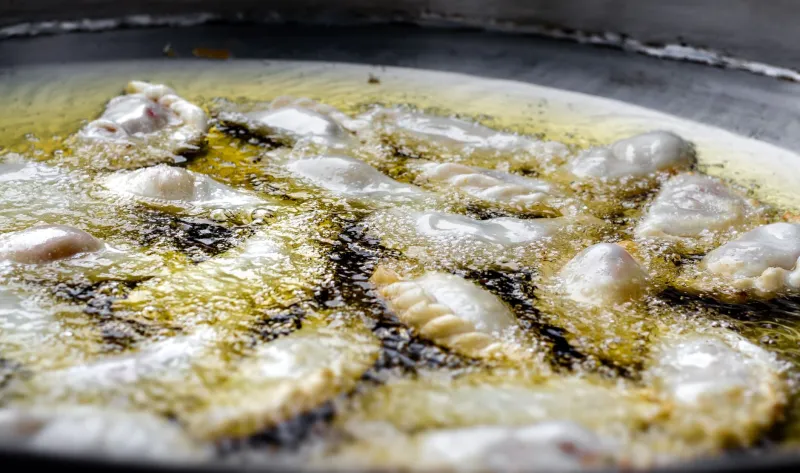
Frying: Use a neutral oil with a high smoke point — vegetable or canola oil works fine — heated to around 350°F. Don't crowd the pot. Fry in batches until they're a deep golden brown, turning once. Drain on a wire rack, not paper towels, so the bottom doesn't steam and go soft.
Serve immediately. They do not improve with time.
Empanadas de Maíz: Where Texture Meets Tradition
Panamanian empanadas are not the same as Argentine or Colombian empanadas, and that distinction matters. The dough is made from masa — the same nixtamalized corn flour used for tortillas — which gives the finished empanada a slightly rougher, more rustic texture and a distinctly corn-forward flavor that sets it apart from wheat-dough versions.
Masa harina (Maseca is the most widely available brand in the US) is the shortcut that makes this accessible to home cooks. Combine it with warm water, a pinch of salt, and a small amount of lard or vegetable shortening until you get a pliable dough that doesn't crack when you flatten it. If it's crumbling, add water a tablespoon at a time.
The filling options: This is where Panamanian cooks exercise flexibility. Seasoned chicken, beef picadillo, or a simple combination of cheese and caramelized onion all work well. The rule is the same as with carimañolas: the filling should be relatively dry. A wet filling is a structural problem.
Shaping: Divide the dough into balls roughly the size of a lime. Press each one flat between two pieces of plastic wrap using a tortilla press or the bottom of a heavy pan. Add filling to one half of the circle, fold the other half over, and press the edges together firmly. Crimp with a fork to seal.
Cooking method: You have two options here. Frying gives you a crispier exterior and a slightly richer result. Cooking on a dry comal or cast-iron griddle gives you something more toasted and lighter — closer to what you'd find at a market stall in the interior provinces. Both are correct. The choice depends on your mood and your tolerance for oil cleanup.
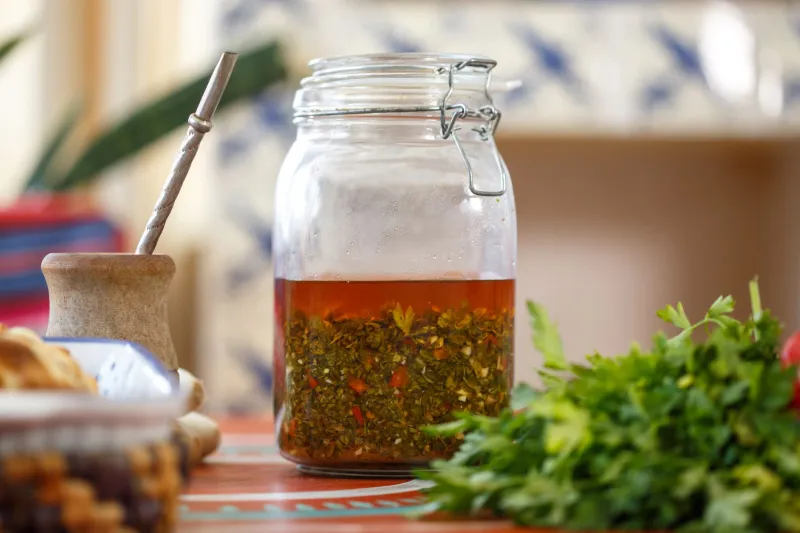
Either way, serve with a simple curtido — a quick-pickled cabbage slaw — or a spoonful of chombo hot sauce on the side.
Patacones: The Snack That Rewards Patience
If you've been to any Panamanian gathering in the US, you've had patacones. Twice-fried green plantain rounds — smashed flat, fried again, salted, and served with everything from guacamole to ceviche to just a smear of mayo-ketchup — are so ubiquitous in Panamanian culture that they barely register as a recipe anymore. They're just part of the table.
But bad patacones are everywhere, and they're usually the result of one of two mistakes: frying at the wrong temperature, or not smashing them flat enough.
The plantain: You want green plantains — deeply green, firm, with no yellow showing. The starchier the plantain, the better the patacón. Yellow plantains will give you something softer and sweeter, which is fine for other applications but wrong here.
First fry: Peel the plantain (score the skin lengthwise with a knife and peel back — don't try to peel it like a banana) and cut into rounds about an inch thick. Fry in oil at around 325°F until they're cooked through but not yet crispy — about three to four minutes per side. They should be pale gold, not brown. Remove and drain.
The smash: This is where most home cooks go wrong. Use the bottom of a heavy glass, a small plate, or a tostonera if you have one, and press each round firmly until it's about a quarter-inch thick. Don't be timid. A thick patacón is a soft patacón, and that's not what you're going for.
Second fry: Raise the oil temperature to 375°F and fry the smashed rounds again until they're deeply golden and crispy around the edges — two to three minutes per side. Salt immediately after they come out of the oil, while they're still hot and the surface will absorb it.
Serve within ten minutes. Like carimañolas, patacones are not patient food. They want to be eaten hot.
The Real Point of Street Food
Panamanian street food exists at the intersection of economy, community, and flavor. These are dishes designed to be satisfying, portable, and affordable — made with skill that took years to develop but ingredients that cost very little. When you make them at home, you're not just cooking a recipe. You're connecting to a food culture where the vendor who makes the best carimañola in town is a local celebrity, where the right patacón can make or ruin a party, where food is never just fuel.
That context doesn't make the cooking harder. It makes it more interesting. Start with one of these three, get comfortable with the technique, and then start experimenting. The vendors in Panama have been doing exactly that for years.