Meet the Panamanian Cheese That Sizzles, Squeak-Free — And Actually Holds Its Shape in a Hot Pan
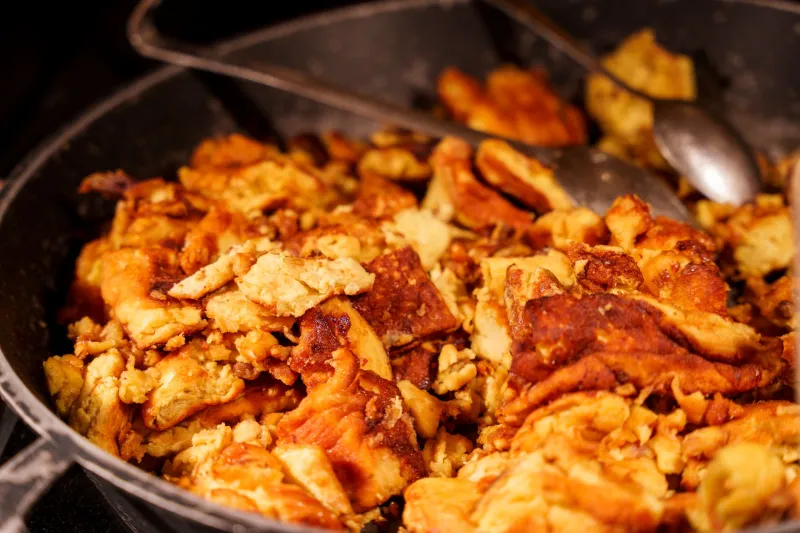
If you've spent any time around Panamanian home cooking, you've probably encountered the moment where a thick slab of white cheese lands in a hot pan, starts to sizzle aggressively, and turns golden on the outside without losing its shape. No melting. No spreading. Just a crispy, caramelized crust giving way to a warm, slightly salty, firm interior.
That's queso de freír — literally, frying cheese — and it's one of the most useful, least talked-about ingredients in the Panamanian pantry.
What Queso de Freír Actually Is
Queso de freír is a fresh, unaged white cheese made from cow's milk. It has a high melting point, which is what makes it fry-stable — the proteins are structured in a way that lets the exterior brown and crisp while the interior stays intact and cohesive. The texture is firm but not rubbery, mildly salty, and slightly tangy in the way that most fresh Latin cheeses are.
It's made throughout Central America and the Caribbean under various names, but in Panama it's the everyday cheese — the one that shows up at breakfast beside hojaldres, alongside a plate of patacones, or as a simple snack fried in a dry pan and eaten while still warm. If there's a Panamanian table involved, there's a decent chance queso de freír is on it.
The cheese is typically sold in rounds or blocks, and in Panama you'll find it at virtually every market, supermarket, and neighborhood tienda. In the US, it's increasingly available at Latin grocery stores under the name queso para freír, queso de freír, or sometimes queso blanco para freír. Brands like Tropical, Cacique, and several regional producers carry versions that work well in most applications.
How It Compares to What You Might Already Know
If you've cooked with Indian paneer or Cypriot halloumi, you already understand the basic concept — a cheese that holds structure under heat. Queso de freír sits in that same family but has its own distinct character. It's less rubbery than halloumi, milder than many Greek or Mediterranean frying cheeses, and saltier than paneer. It absorbs flavor from whatever it's cooked alongside, which makes it more versatile than its simple profile might suggest.
It's not a melting cheese. Don't try to use it on a pizza or in a quesadilla — it won't do what you want. But in the applications where it belongs, nothing else performs quite the same way.
The Classic Method: Pan-Frying
The most traditional preparation is also the simplest. Cut the cheese into slices about half an inch thick. Heat a dry or lightly oiled skillet — cast iron works beautifully — over medium-high heat until it's genuinely hot. Lay the slices in without moving them and let them develop a crust, about two to three minutes per side. You're looking for deep golden color and a slight crunch when you press the edge with a spatula.
That's it. Serve immediately. The cheese will firm back up as it cools, so eat it while it's hot and the contrast between crust and interior is at its best.
At a Panamanian breakfast table, this goes alongside hojaldres (fried dough), sliced tomato, and strong coffee. It's a complete sensory experience that costs almost nothing to put together.
Beyond Breakfast: Where Else This Cheese Belongs
In a grain bowl. Fried cubes of queso de freír add protein, salt, and textural contrast to a bowl of rice, black beans, pickled onion, and avocado. It does the work that roasted tofu does in a vegetarian bowl, but with more flavor and a better crust.
On top of soup. Drop a few fried slices onto a bowl of black bean soup or a light vegetable broth just before serving. The cheese stays intact, absorbs some of the liquid at the edges, and turns what might be a simple weeknight soup into something that feels considered and complete.
With plantains. Fried sweet plantains (maduros) and queso de freír are one of those combinations that makes you wonder why you didn't know about it sooner. The sweetness of the plantain and the saltiness of the cheese hit differently together — it's a side dish that competes for attention with whatever the main course is.
Skewered and grilled. Cut the cheese into cubes, thread onto skewers with bell pepper and red onion, and grill over medium heat. The exterior chars slightly and the interior stays firm. Serve with a chimichurri or a simple squeeze of lime and you have an appetizer that disappears fast at any backyard gathering.
In a salad. Pan-fried slices laid over bitter greens with sliced mango, toasted pepitas, and a lime vinaigrette make a salad that's genuinely satisfying — the kind where the cheese is the point, not the garnish.
Other Panamanian Cheeses Worth Knowing
Queso de freír gets the most attention, but it's not the only Panamanian cheese with a story. Queso blanco — softer and fresher — is crumbled over dishes the way you might use cotija or feta. It's less salty and more milky, and it dissolves slightly into whatever it touches, making it better for finishing dishes than for cooking.
In some interior regions of Panama, you'll find aged local cheeses with more complex flavor profiles, though these are significantly harder to source in the US. If you're near a specialty Latin market that stocks Panamanian or Honduran products specifically, it's worth asking — availability varies enormously by city.
A Note on Finding It in the US
Latin supermarkets in cities with established Central American communities — Miami, Houston, Los Angeles, New York, Chicago — typically carry queso de freír reliably. If you're in a smaller market, the Cacique and Tropical brands are widely distributed and available through major grocery chains and online retailers. Look in the refrigerated Latin dairy section, usually near the crema and fresh chorizo.
Buy more than you think you need the first time. You'll use it faster than you expect.