The Corn Dishes Panama's Grandmothers Never Wrote Down — And How to Make Them Before They Disappear
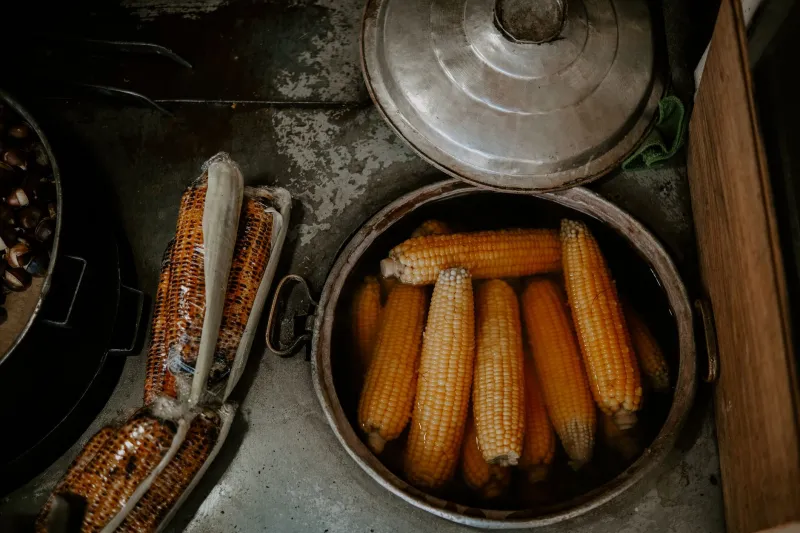
Ask a Panamanian grandmother for her bollo recipe and she'll probably laugh. Not because it's a secret — she'll happily show you how to make it — but because the idea of writing it down strikes her as a little absurd. You don't read how to make bollos. You watch. You feel the masa between your fingers until it feels right. You smell the corn leaves as they steam and know when they're done without looking at a clock.
This is how an enormous portion of Panama's culinary heritage has been transmitted for generations. And it's also why so much of it is slipping away.
With younger generations growing up in the US or in increasingly urbanized Panamanian cities, the kitchen apprenticeship model is breaking down. Nobody has three hours on a Saturday afternoon to stand next to their abuela and learn the texture of properly ground corn by feel. And so dishes that sustained entire communities for centuries are slowly fading into memory.
These are some of those dishes — and a genuine attempt to put them into words, measurements, and steps so that home cooks in American kitchens can keep them alive.
Why Corn Is Central to Everything
Before we get into individual dishes, it helps to understand what corn means in Panamanian cooking. This isn't the sweet yellow corn you throw on the grill in July. Traditional Panamanian cooking uses dried field corn — often ground fresh, or masa harina as a practical substitute — and the flavor profile is earthy, slightly fermented in some preparations, and deeply savory.
Corn in Panama is a workhorse ingredient. It feeds families, marks celebrations, and appears in everything from breakfast to late-night street snacks. The techniques built around it — soaking, grinding, fermenting, wrapping, steaming — represent centuries of accumulated knowledge that no single recipe card could ever fully capture.
Bollos: The Dish That Deserves Way More Attention Than Tamales
Everyone in the US has heard of tamales. Far fewer people have heard of bollos, which is a genuine shame, because bollos might be the more interesting dish.
At their most basic, bollos are masa — made from freshly ground corn or masa harina — mixed with salt and sometimes a small amount of fat, then wrapped in dried corn husks or bijao leaves and steamed until firm. But that description barely scratches the surface.
The key variable is the corn itself. Some regions of Panama use a softer, starchier corn that produces a smoother, almost pudding-like interior. Others use a drier, harder variety that gives the bollo more structure and a slightly denser chew. The wrapping material changes the flavor too — bijao leaves (a broad tropical leaf related to the banana plant) impart a subtle grassy, almost herbal note that dried corn husks can't replicate.
Basic Bollos for American Kitchens:
- 2 cups masa harina
- 1 ½ cups warm water (add gradually)
- 1 tsp salt
- 2 tbsp lard or vegetable shortening
- Dried corn husks, soaked in warm water for 30 minutes
Combine the masa harina, salt, and fat, then add water slowly, kneading until you have a soft, pliable dough that holds its shape without cracking. It should feel like Play-Doh — if it sticks to your hands, add a little more masa harina; if it cracks, add a splash more water.
Shape the dough into short cylinders, about the size of a small fist. Wrap each one in a soaked corn husk, folding the ends under, and tie loosely with a strip of husk or kitchen twine. Steam for 45 to 55 minutes. The bollo is done when it pulls cleanly away from the husk.
Eat them warm, with nothing on the side. Or split one open and add a spoonful of guiso — a simple stewed meat sauce — for something more substantial.
Arepas Panameñas: Not What You're Thinking
If you're familiar with Colombian or Venezuelan arepas, set that knowledge aside for a moment. Panamanian arepas are a different animal entirely.
Where Colombian arepas are savory and often stuffed, Panamanian arepas are slightly sweet — they often contain a small amount of sugar and sometimes a touch of anise — and they're fried rather than griddled. The result is something closer to a corn fritter or a thick corn cake with a golden, slightly crispy exterior and a soft, dense crumb.
They're a breakfast food, traditionally served alongside eggs or with a cup of strong coffee. In Panama City, you can still find vendors selling them from griddles and fryers in the early morning, but that's becoming rarer.
Panamanian-Style Arepas:
- 2 cups masa harina
- 1 cup warm water
- 2 tbsp sugar
- ½ tsp salt
- ¼ tsp anise seeds (optional but traditional)
- Oil for frying
Mix the dry ingredients, then add water gradually until you get a thick, moldable dough. Form into flat rounds about ½ inch thick and 3 inches across. Fry in about an inch of oil over medium heat until deeply golden on both sides — 3 to 4 minutes per side. Drain on paper towels and eat immediately.
The anise is the detail that most modern recipes skip, and it's the detail that makes these taste like something your grandmother made rather than something you found on a cooking blog.
Chicheme: Corn You Drink
Not every corn preparation in Panama is solid. Chicheme is a thick, cold drink made from cracked corn — specifically a variety called maíz otoe — simmered with milk, sugar, cinnamon, and vanilla until the corn is tender and the liquid has thickened into something between a beverage and a dessert.
It's sold from street carts, served at family gatherings, and consumed in enormous quantities during festivals. It's also almost impossible to find in the US, which means making it at home is your only option.
The closest substitute for maíz otoe is hominy — the same canned or dried corn used in pozole. Simmer 2 cups of rinsed hominy with 4 cups of whole milk, 2 cups of water, 3 tablespoons of sugar, one cinnamon stick, and a splash of vanilla extract. Cook on low heat for 45 minutes to an hour, stirring frequently, until the corn is completely soft and the liquid has thickened. Serve cold.
It's sweet, warming, and deeply comforting — the kind of thing that makes you feel like you're somewhere else entirely.
Why This Matters Beyond Nostalgia
There's a temptation to treat dishes like these as charming relics — things to make once for a dinner party theme night and then forget. But that framing misses the point entirely.
These recipes represent a complete and sophisticated culinary system built around a single ingredient. The techniques involved — the fermentation, the stone grinding, the intuitive timing — took generations to develop and can't be recovered once they're gone. Keeping them alive in American kitchens, even in adapted form, is a genuine act of cultural preservation.
And honestly? They're just really good food. That's reason enough.